
After a deadly confrontation at a Tullahoma home, witnesses may tell very different stories about what happened. One might describe a deliberate attack and another, a fight that spiraled out of control in seconds.
In Tennessee, the difference between murder and manslaughter depends on what the accused intended or knew, whether adequate provocation was involved, and what the evidence proves. Those distinctions can change the charge and punishment.
Murder vs. Manslaughter: What Must the State Prove?
Murder generally involves premeditation, a knowing killing, or qualifying circumstances. Voluntary manslaughter involves an intentional or knowing killing in a state of passion caused by adequate provocation. Other homicide offenses involve recklessness or criminal negligence.
| Offense | What Distinguishes It |
| First-degree murder | Premeditated intentional killing or certain other statutorily defined killings |
| Second-degree murder | Knowing killing or qualifying drug-distribution death |
| Voluntary manslaughter | Intentional or knowing killing in a state of passion caused by adequate provocation |
| Reckless homicide | Conscious disregard of a substantial, unjustifiable risk |
| Criminally negligent homicide | Failure to recognize a substantial, unjustifiable risk that should have been recognized |
Why a Murder Charge Does Not Always Mean Someone Planned It
Premeditated first-degree murder requires an intentional killing after reflection and judgment.
Tennessee imposes no fixed period for forming intent. Messages sent before the incident, decisions to retrieve a weapon, or opportunities to reconsider may be relevant, but none automatically proves premeditation.
First-degree murder can also arise during certain felonies, including robbery, burglary, and kidnapping, without a separate intent to kill. Second-degree murder includes knowingly causing death and specified fatal drug distributions.
Someone who leaves a confrontation in Manchester, retrieves a weapon, and returns to kill may face a claim of premeditation. Someone who strikes a fatal blow while aware death is reasonably certain may face second-degree murder without planning.
When Does a Sudden Confrontation Support Manslaughter?
Voluntary manslaughter requires an intentional or knowing killing in a state of passion caused by provocation sufficient to make a reasonable person act irrationally. Anger or insults alone do not necessarily qualify. The question is whether the provocation was legally adequate and produced the required state of passion.
Suppose someone responds with deadly force after a sudden physical attack outside a Shelbyville business. Whether the attack created legally adequate provocation or the response was justified as self-defense is critical.
Unlike provocation, lawful self-defense may entirely justify the killing.
Can Murder and Manslaughter Be Alleged in the Same Case?
Yes. Prosecutors may present different homicide theories, and a jury considering a murder charge may be instructed on voluntary manslaughter as a lesser-included offense when the evidence legally supports it.
Tennessee expressly recognizes voluntary manslaughter as a lesser-included offense of premeditated first-degree and second-degree murder.
If the evidence supports a lesser-included offense, jurors may consider manslaughter even when the original charge is murder. Guilty verdicts for greater and lesser homicide offenses involving the same death generally merge into one conviction.
How Does Evidence Affect a Murder or Manslaughter Case?
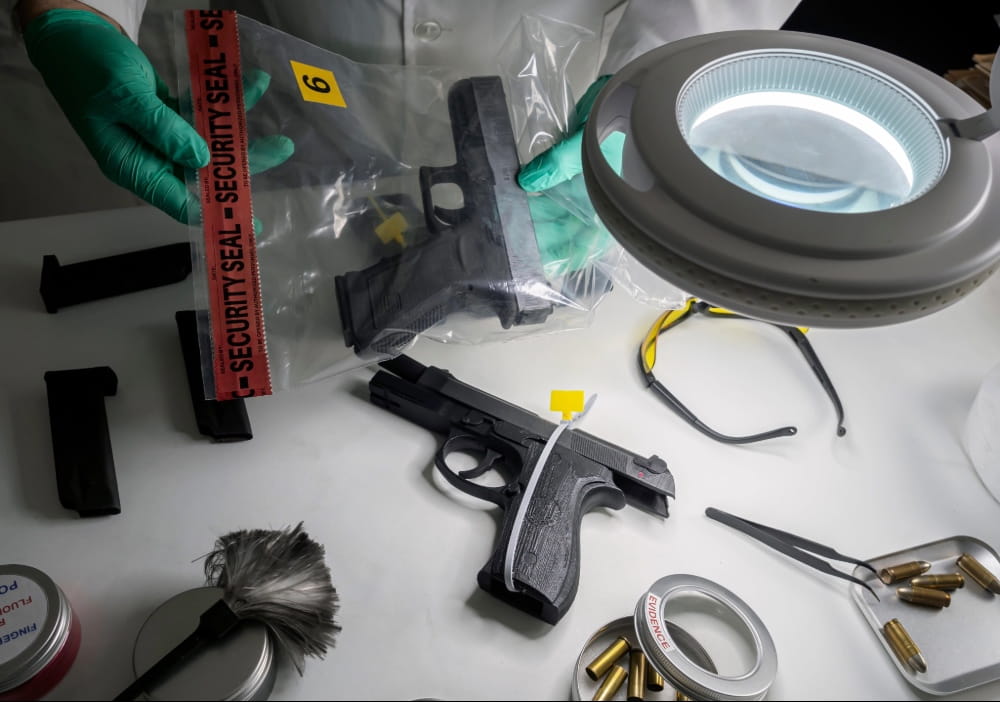
An arrest report may tell one version of events, but physical evidence can reveal something different. Phone records and surveillance may clarify the timeline, while autopsy findings and firearms evidence can help determine how the fatal injuries occurred.
Witnesses may miss seconds or recall events differently. Body-camera footage and 911 recordings can reveal inconsistencies that shape prosecutors’ views of intent or provocation.
We examine whether the evidence supports the charge, whether a lesser offense is more appropriate, and whether the circumstances establish a legal defense.
Speak with counsel before police questioning. Preserve records and avoid coordinating stories with witnesses.
What Does the 2026 Sentencing Change Mean for Certain Murders?
For knowing second-degree murder committed on or after July 1, 2026, Tennessee requires a sentence no lower than Range II. That generally means 25–40 years, with Range III possible when appropriate. The change applies to knowing killings, not to every category of second-degree murder.
Voluntary manslaughter also became a Class B felony in 2023, making older sentencing information unreliable for newer offenses.
Why Do Early Decisions Matter in a Coffee County Homicide Case?
Coffee County felonies may begin with a General Sessions preliminary hearing and move to Circuit Court after indictment. Some begin by indictment. Decisions about interviews, forensic testing, and record preservation should not be delayed until trial.
In Manchester, the Justice Center handles the county’s Circuit Court proceedings, but key evidence may be lost well before a court date.
You deserve straight answers, not promises no one can make. As we prepare to challenge the State’s case, we’ll explain the evidence, potential charges, and decisions ahead.
The Charge Is Serious. Your Defense Should Be, Too
A homicide accusation can change your life before you ever enter a courtroom. At The Law Firm, PC, we take your concerns seriously, explain your options honestly, and prepare to fight for you.
If you face murder or manslaughter charges in Tullahoma, Manchester, Shelbyville, or surrounding communities, contact us for a confidential consultation. Bring your charging documents, and let’s discuss your next steps.
FAQs About Tennessee Murder and Manslaughter Charges
What Is the Difference Between Murder and Manslaughter in Tennessee?
Murder generally requires premeditation, knowledge, or another qualifying statutory circumstance. Voluntary manslaughter requires an intentional or knowing killing accompanied by legally adequate provocation and a resulting state of passion. Neither label can be determined from the outcome alone.
What Are the Degrees of Murder Under Tennessee Law?
Tennessee recognizes first-degree and second-degree murder. First-degree includes premeditated intentional killings and certain felony-related killings. Second-degree generally covers knowing killings, plus specific drug-distribution deaths.
What Is the Difference Between Voluntary and Involuntary Manslaughter in Tennessee?
Tennessee does not separately classify involuntary manslaughter. An unintended death may instead constitute reckless homicide if someone consciously disregarded a substantial, unjustifiable risk, or criminally negligent homicide if they failed to recognize a risk they should have perceived.
What Are the Sentences for Murder and Manslaughter in Tennessee?
First-degree murder can carry life imprisonment, life without parole, or, in legally qualifying cases, the death penalty. Second-degree murder is a Class A felony, generally 15–60 years across sentencing ranges, subject to the new 2026 minimum for knowing killings. Voluntary manslaughter is Class B, carrying an authorized 8–30-year range. Individual ranges vary by law.
What Is Criminally Negligent Homicide in Tennessee?
It is a death caused by criminal negligence: failing to perceive a substantial, unjustifiable risk that a person should have recognized, with a gross departure from reasonable care. It is a Class E felony, carrying an authorized range of one to six years.
Legal References Used to Inform This Page
To ensure the accuracy and clarity of this page, we referenced official legal and other resources during the content development process:
- Tenn. Code Ann. § 39-13-211 (2025), voluntary manslaughter.
- Tenn. Code Ann. § 39-13-202 (2025), first-degree murder.
- Tennessee General Assembly, Public Chapter 752 (2026), second-degree murder sentencing amendment
- Tenn. Code Ann. § 39-13-210 (2025), second-degree murder, pre-2026 sentencing amendment
- Tenn. Code Ann. § 39-13-215 (2025), reckless homicide.
- Tenn. Code Ann. § 39-13-212 (2025), criminally negligent homicide.
- Tenn. Code Ann. § 39-11-302 (2025), definitions of culpable mental states.
- Tenn. Code Ann. § 39-11-611 (2025), self-defense.
- Tenn. Code Ann. § 40-18-110 (2025), lesser-included offenses and jury instructions.
- State v. Young, No. M2016-01149-CCA-R3-CD (Tenn. Crim. App. 2017), merger of homicide convictions.
- Tenn. Code Ann. § 40-35-112 (2025), felony sentencing ranges.
- Tenn. Code Ann. § 40-35-111 (2025), authorized imprisonment and fines.
- Coffee County, Tennessee, General Sessions Criminal Court.
- Coffee County, Tennessee, Circuit Court Clerk.

Alan has spent his career standing up for those the system tries to push aside. With over a decade of experience in criminal and corporate law, he pairs sharp trial skills with a deep sense of empathy—earned through his own personal walk through the justice system.
At The Law Firm, PC, Alan personally handles each case, giving clients direct access, honest advice, and fierce representation every step of the way. He knows their stories matter—and he fights to make sure they’re heard.

 Loading...